
LPG Storage Tanks
The tank is the heart of a central gas system. Selecting it is not only about capacity: location, fittings, filling arrangement and inspection plan together determine how safe and operable the system will be for years.

The storage principle
LPG is stored as a liquid under its own vapour pressure and drawn off as vapour from the top of the tank. This means the available withdrawal rate depends not on capacity alone but on the liquid's ability to vaporise inside the tank — a factor that must be considered at high continuous demand.
Essential tank fittings
- A safety relief valve for excess pressure.
- A level indicator for monitoring stock before depletion.
- A dedicated filling valve for the delivery tanker connection.
- A vapour service valve with isolation.
- A pressure gauge for monitoring tank condition.
- Earthing points and impact protection appropriate to the location.
Capacity selection
- Daily consumption and the facility's expected peak rate.
- The required interval between refills.
- Available space and the separation distances applicable on site.
- Likely future expansion in appliances or buildings.
- Availability of supply service and tanker access to the site.
Siting and installation
The tank is placed in a naturally ventilated area, away from ignition sources, ventilation discharges and low building openings, on a foundation that prevents movement or settlement. Tanker access must remain clear and safe, and every fitting must be inspectable without dismantling other parts. Technical requirements are applied according to the specifications and regulations in force for the project and its approved design.
Inspection and maintenance
- Periodic visual inspection of the tank, supports, coating and any corrosion signs.
- Tightness checks of the fittings and connections around the tank.
- Verification that the level indicator and pressure gauge function correctly.
- Confirming the tank surroundings are not obstructed by stored materials or vegetation.
- Recording each inspection in a retrievable log.
Frequently asked questions
Is a larger tank always better?
No. A larger tank needs more space and separation, costs more, and may add nothing if consumption is low. The right choice balances consumption, refill frequency and site constraints.
Why does performance drop at high demand even with a full tank?
Because vaporisation inside the tank has a limit; if withdrawal exceeds it, available pressure falls. The remedy is reviewing the design and required withdrawal rate, not filling more gas.
Related products
Above-Ground LPG Tank
Above-ground LPG tank for central gas storage feeding the facility network.
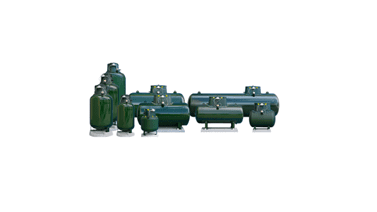
Underground LPG Tank
Underground LPG tank that saves space and preserves the site's appearance.

APS2000 Adjustable First-Stage Regulator with OPSO
First-stage pressure regulator that steps tank pressure down to a stable distribution pressure.
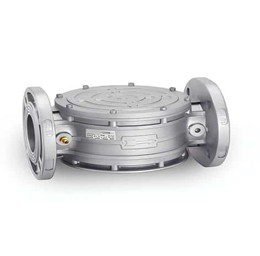
Gas Filter DN65
Gas filter that captures particulates before they reach regulators, meters and appliances.
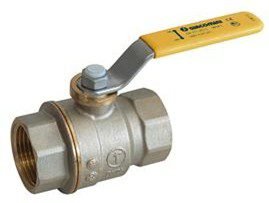
Gas Valve R730GA
Manual gas valve used to isolate a line or appliance from the central gas network.
Related services
Related articles
Underground vs Above-ground LPG Tanks
A practical comparison of underground and above-ground tanks across space, cost, maintenance and site conditions.
LPG / Central GasWhat Is a Central Gas System?
An overview of the LPG Central Gas System — from tank to appliances — and why it replaces scattered cylinders.
LPG / Central GasCentral Gas System Safety
Safety principles for LPG systems: gas properties, protection layers, emergency procedures, and the inspections that keep them effective.
LPG / Central GasLPG Testing & Commissioning
The steps for testing and commissioning a central gas system: tightness, purging, regulator setting, detection and shut-off tests, and handover.
Have a project or an existing facility that needs an engineering review?
Our engineering team can review your requirement and propose a solution suited to the application, the site and the applicable requirements.