
LPG Central Gas Systems in Saudi Arabia
LPG Storage, Vaporization, Distribution & Safety Systems
A central gas system replaces scattered cylinders with one safe, controlled installation: a central tank, vaporization where required, pressure regulation, a distributed pipeline network, and detection plus emergency shut-off. We deliver design, supply, installation, testing and maintenance for villas, restaurants, hotels, commercial and industrial facilities.
System scope
From storage and vaporization through to appliance points, safety and detection systems.
Storage & vaporization
- Above-ground LPG tanks
- Underground LPG tanks
- Tank bases and supports
- Vaporizers
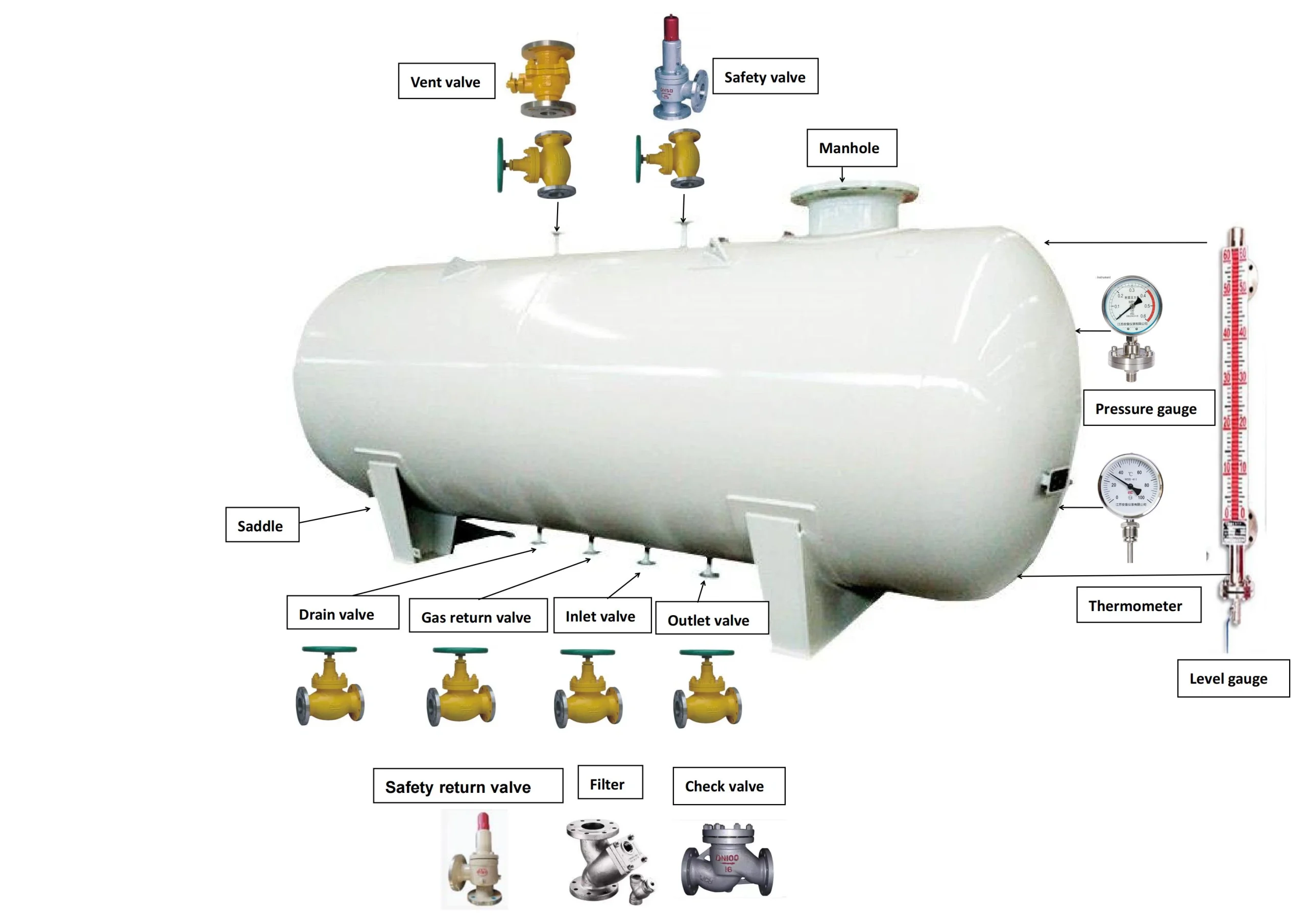
- Tank valves and accessories
- Tank area and site requirements
Pressure regulation & networks
- First and second stage regulators
- High-pressure networks
- Low-pressure networks
- Copper and steel pipework per design
- Distribution to appliance points
- Consumption meters where required
Safety & control
- Solenoid valves
- Emergency shut-down (ESD) systems
- Emergency stop buttons
- Gas cabinets
- Ventilation and location requirements
- Labelling and documentation
Detection & alarm
- Gas leak detectors
- Gas alarm panels
- Alarm interlock with automatic shut-off
- Outlets and critical areas
- Periodic detector testing
- Maintenance and calibration
Central gas network components
From the tank and regulation stage through to appliance points, leak detectors and shut-off systems.
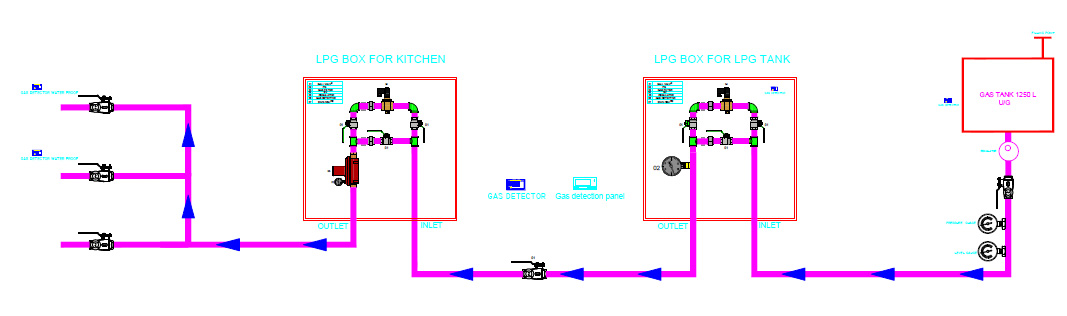
LPG tank accessories
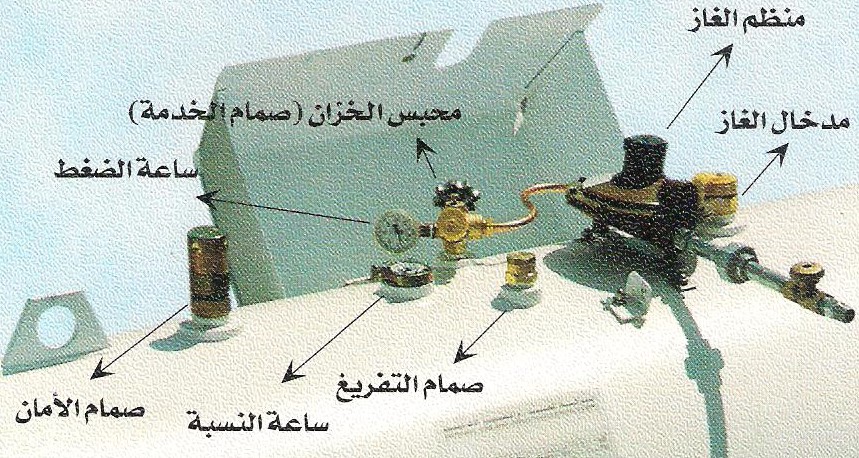
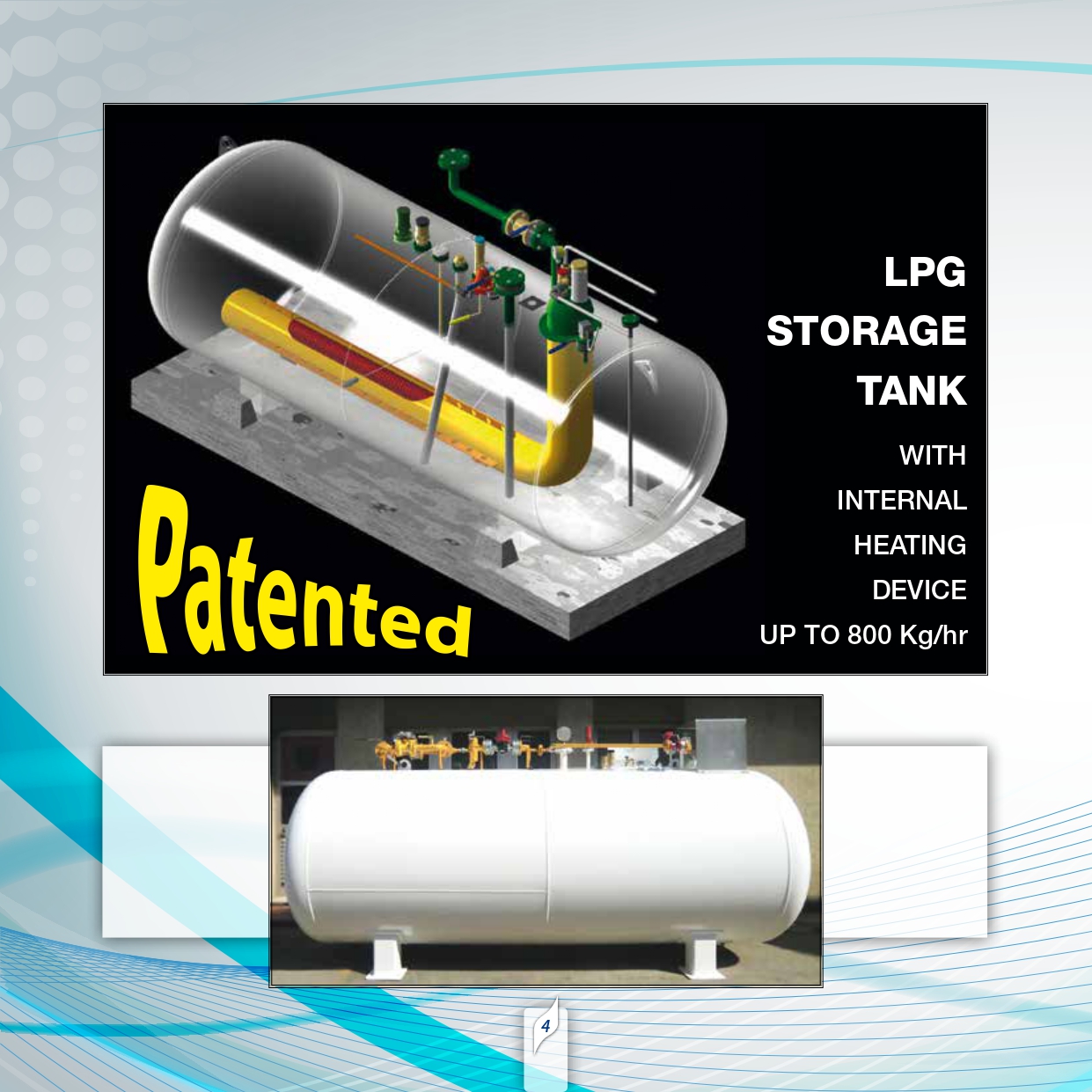
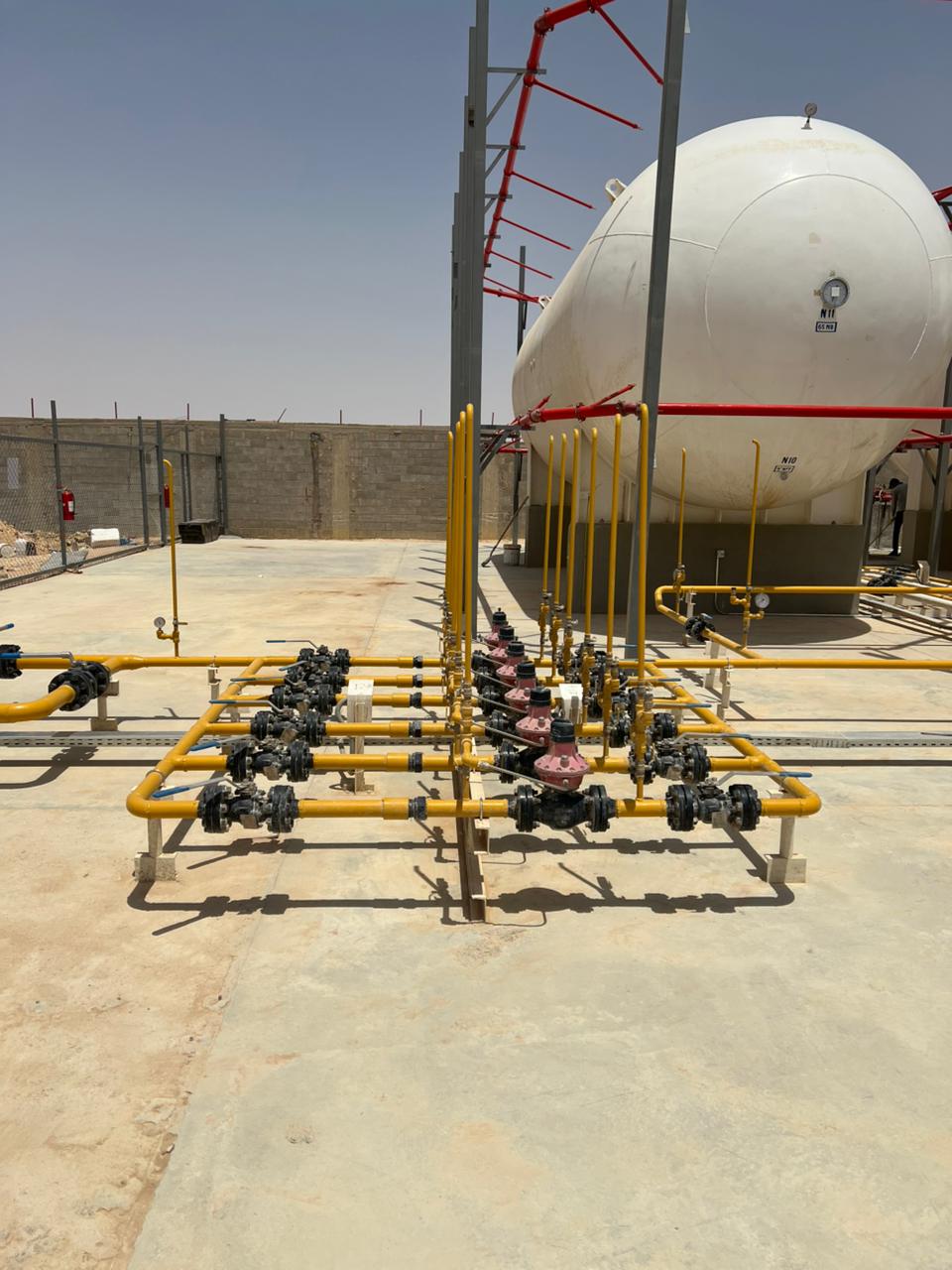
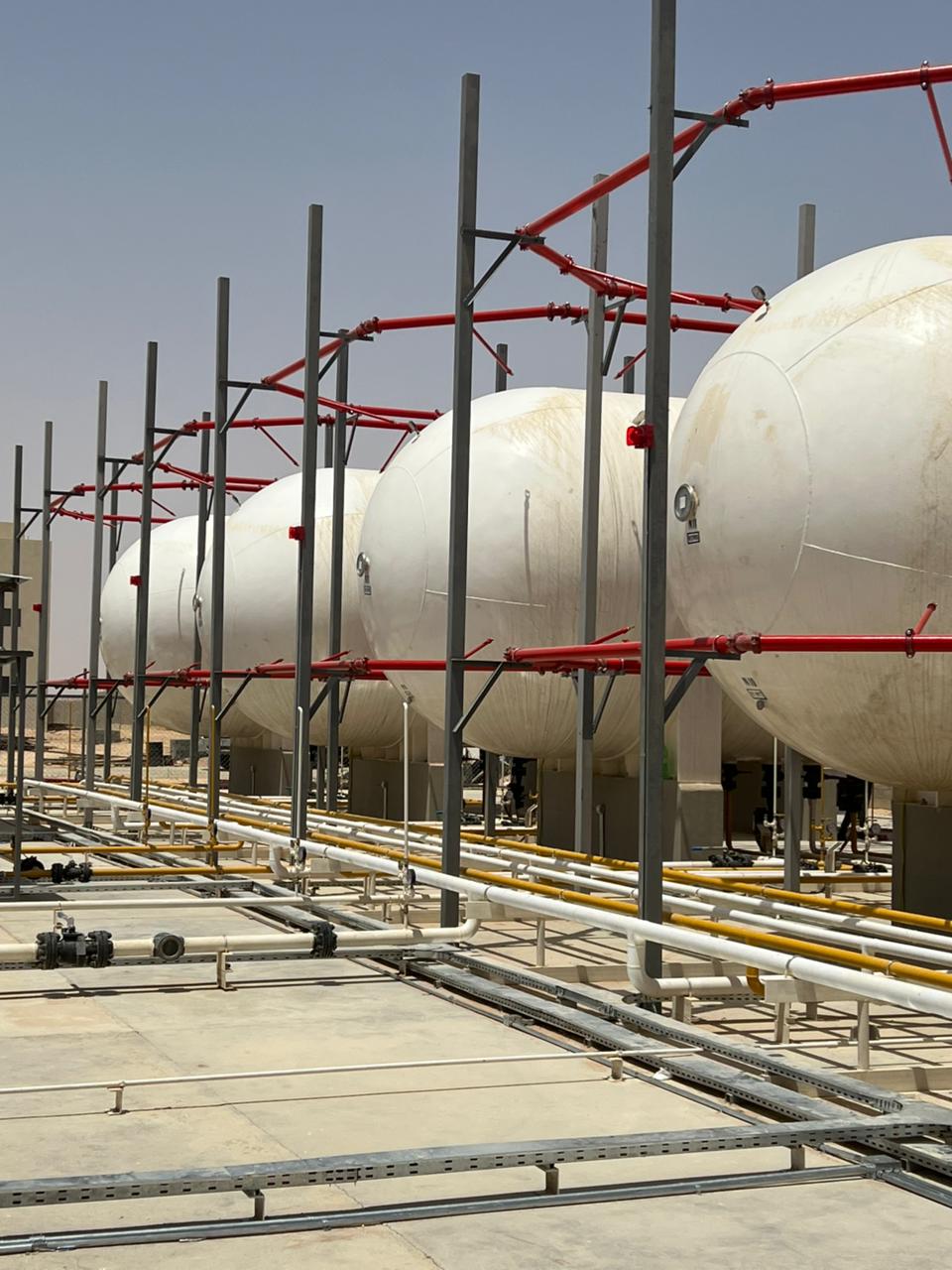
LPG station projects
Real photographs from executed LPG central gas stations.
Central gas project delivery cycle
Survey → Design → Supply → Install → Test → Maintain
- 01Survey & Assessment
- 02Engineering Design
- 03Supply
- 04Installation
- 05Testing & Commissioning
- 06Operation & Maintenance
Applications
Testing, commissioning & maintenance
- Network pressure testing
- Leak testing
- Regulator inspection and pressure setting
- Valve and shut-off system testing
- Detector and alarm panel testing
- Trial operation
- Scheduled maintenance programmes
- Technical fault response
Safety & leak detection
- Gas leak detectors
- Gas alarm panels
- Alarm interlock with automatic shut-off
- Outlets and critical areas
- Periodic detector testing
- Maintenance and calibration
Our LPG services
Each service has its own page setting out scope and deliverables — from design to maintenance and leak detection.
LPG Central Gas System Design
LPG central gas design for villas, restaurants and facilities: appliance load calculation, tank size and location, pressure reduct…
LPG Systems & Components Supply
Supply of LPG system components: tanks and accessories, pressure regulators, filters, manual and solenoid valves, meters, rigid an…
LPG Central Gas Installation
LPG network installation: tank base preparation and setting, pressure reduction stages, main and branch pipework, meters, applianc…
LPG Testing & Commissioning
LPG network testing and commissioning: pressure and tightness testing, joint inspection, regulator setting, leak detector and emer…
LPG Central Gas Maintenance
LPG system maintenance: tank, regulator and filter inspection, valve and meter checks, leak detector and emergency shut-off testin…
Gas Leak Detection & Emergency Shut-off Systems
Gas leak detection systems: detector positioning, control and alarm panels, interlock with the solenoid emergency shut-off valve, …
LPG Tank Systems
LPG tank systems: capacity and type selection between above-ground and underground, site and base preparation, accessories and fil…
LPG products
LPG Storage Tanks
- Above-ground and underground LPG tanks and their accessories, matched to site area and expected consumption.
Pressure Regulators
- Fixed and adjustable first-stage regulators across a range of flow capacities.
Solenoid Valves
- Normally open and normally closed gas solenoid valves for emergency shut-off and detector interlock.
Gas Filters
- Particulate filters protecting regulators, meters and appliances, in a range of sizes.
Gas Valves
- Manual isolation valves for appliances and branches in several models and sizes.
Gas Meters
- Consumption meters per unit or tenant, with aluminium or stainless steel bodies.
Gas Pipes
- Seamless steel pipe for main lines and flexible stainless pipe for appliance connections.
Gas Leak Detectors
- Domestic, industrial, explosion-proof and water-resistant detectors matched to the installation environment.
Control & Alarm Panels
- Control panels of various capacities managing detectors and emergency shut-off, plus audible/visual alarm sirens.
Engineering references
We design and execute against the engineering reference approved for each project. Technical values and requirements apply according to the applicable standard, the project specification and the approved design.
Engineering guides
What Is a Central Gas System?
An overview of the LPG Central Gas System — from tank to appliances — and why it replaces scattered cylinders.
Central Gas for Villas
How a central gas system is designed for a villa: tank location, internal pipework, detection and emergency shut-off.
LPG Systems for Restaurants & Kitchens
What a commercial kitchen gas system needs: simultaneous load, ventilation, detection and shut-off, and day-to-day usability.
LPG Storage Tanks
The role of the LPG tank in the system, its essential fittings, capacity and siting criteria, and periodic inspection needs.
Underground vs Above-ground LPG Tanks
A practical comparison of underground and above-ground tanks across space, cost, maintenance and site conditions.
Gas Leak Detection & Alarm Systems
How a Gas Leak Detection system works, and why it is always tied to emergency shut-off rather than an audible alarm alone.
LPG Testing & Commissioning
The steps for testing and commissioning a central gas system: tightness, purging, regulator setting, detection and shut-off tests, and handover.
Central Gas System Safety
Safety principles for LPG systems: gas properties, protection layers, emergency procedures, and the inspections that keep them effective.
Frequently asked questions
How does central gas differ from separate cylinders?
A central gas system uses a single tank with a distributed pipeline network, pressure regulation and safety systems instead of moving cylinders through the building — reducing handling risk and improving operational consistency.
Above-ground or underground tank?
Selection depends on available space, site conditions, regulatory requirements and safe separation distances, as well as the required consumption and access for refilling and maintenance.
Does the system include detection and emergency shut-off?
Leak detectors, an alarm panel, a solenoid shut-off valve and an emergency stop can be included so that supply is isolated automatically when a leak is detected — according to the design and the requirements applicable to the facility.
Do you work with restaurants and central kitchens?
Yes. The network is sized from appliance loads and simultaneous operating rates, with kitchen ventilation and safety requirements taken into account.
Have a project or an existing facility that needs an engineering review?
Our engineering team can review your requirement and propose a solution suited to the application, the site and the applicable requirements.